Driveways & Walkways
Lift oil, rust, and tire marks for a safer, brighter entrance—without damaging concrete or pavers.
Photo quotes in about an hour · Same-week scheduling · Licensed & insured
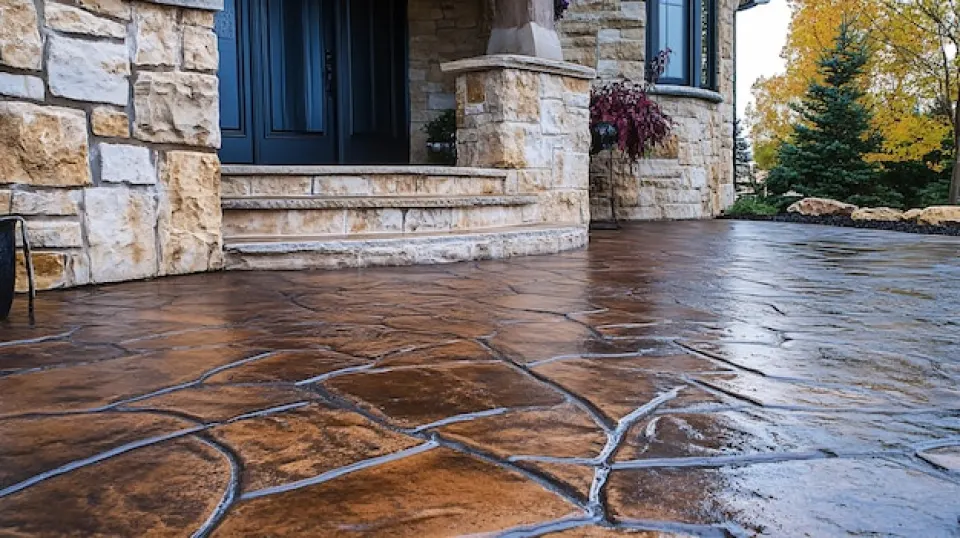
Remove stains. Restore curb appeal. Protect concrete.
Professional degreasers and rust removers break down oil and iron deposits at the source, so the surface cleans evenly without stripes. Calibrated pressure, soft-wash nozzles, and a commercial surface cleaner protect concrete and paver joints while restoring color and texture.
Concrete, pavers, asphalt, and exposed aggregate
Methods are tailored to each driveway material:
- Concrete — even, stripe-free cleaning with pretreatment for oil and tire marks; controlled passes protect the cream layer.
- Pavers — joint-safe wash that preserves sand; optional polymeric sand top-up and sealing for color pop and stain resistance.
- Asphalt — low-pressure rinse with asphalt-safe degreasers to lift oil and fuel drips without softening the surface.
- Exposed aggregate — gentle technique that lifts grime without knocking out stones; sealing available to revive gloss and contrast.
Oil, rust, paint, and gum — handled the right way
Targeted chemistry for stubborn driveway problems:
- Oil and hot-tire marks: degreaser dwell, hot water, and surface-cleaner passes for consistent color.
- Rust and mineral: iron-specific removers that dissolve stains without bleaching.
- Paint and overspray: selective treatment to release latex or oil-based spots.
- Gum and spills: soften, lift, and rinse for spotless walk paths.
A proven process — no stripes, no surprises
- Test spot — confirm surface type, sealer presence, and the safest pressure and chemistry on a small area.
- Pretreat — apply pro-grade solutions to break down oil, rust, and gum before washing.
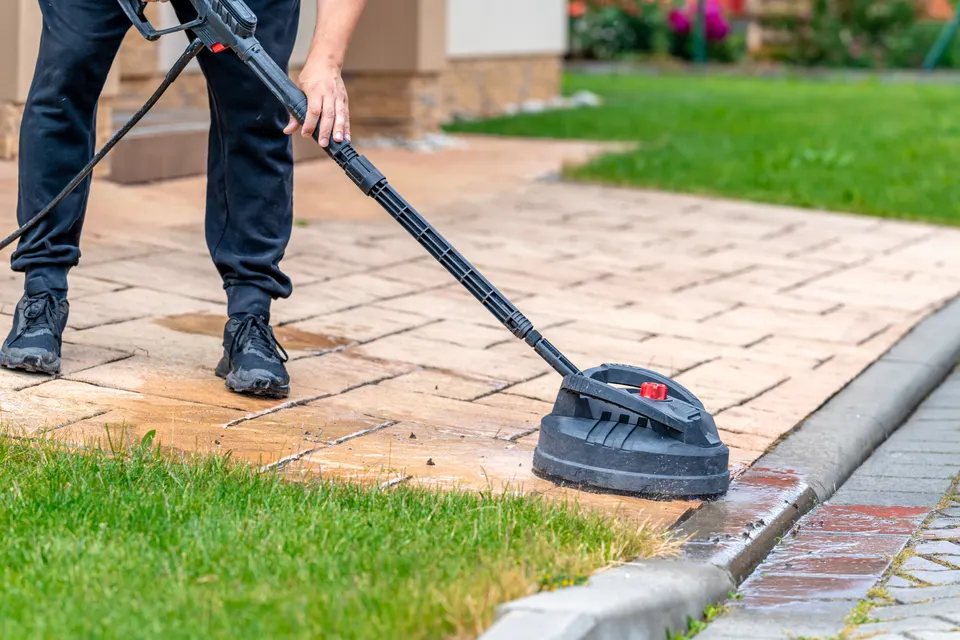
- Wash — a commercial surface cleaner makes consistent passes; edges and tight spots get detailed by hand.
- Rinse & review — contaminants rinsed away, shadows spot-treated, and a final walk-through with a quick photo record.
Why the rental machine leaves stripes
A rented wand and a Saturday can absolutely clean a driveway — unevenly. Wand-washing flatwork leaves overlapping arcs (“tiger striping”) because pressure and distance change with every stroke, and without pretreatment the wand has to fight stains with raw force the concrete pays for. A commercial surface cleaner solves the geometry problem — twin spinning jets under a shroud at fixed height — while degreaser dwell solves the chemistry problem before the water starts. The result is the difference between “washed” and “uniform.”
What does driveway cleaning cost in Los Angeles?
Pricing depends on size, stain severity, and access. Send photos of the driveway and the address — most estimates come back within 1 hour during business hours.
What’s included
- Test spot to confirm the safest pressure and chemistry for your surface
- Pretreatment of oil, rust, paint, and gum before any washing starts
- Commercial surface-cleaner passes for a uniform, stripe-free finish
- Hand detailing along edges, walkways, and tight spots
- Final rinse, spot-treatment of shadows, and a photo record of the result
- Optional: polymeric sand top-up and sealing for pavers
What clients say
“My driveway was covered in years of oil stains and grime. I honestly didn’t think it would ever look clean again. Logan made it look spotless in under 2 hours. Super friendly and pricing was totally fair for the job done.”
— Amanda G., Van Nuys · ★★★★★
When to book it
The earlier a stain is treated, the less shadow it leaves — oil and hot-tire marks that sit for years may need repeat treatments where a fresh spill lifts in one pass. If the driveway is part of a bigger refresh, pairing it with house washing or sidewalk cleaning gets the whole entrance done in one visit.
Where we wash driveways
Crews cover the whole county with same-week scheduling and weekend availability for busy households and shared driveways — including Van Nuys, Northridge, Burbank, and Studio City. Ready for a number? Send photos and get a price.
Why LA driveways stain faster
Los Angeles parks outside: hot-tire marks bake into sun-soaked concrete, oil drips cook in by afternoon, and urban dust films over everything between rains. Valley driveways take the hardest sun of the county, while streets near the coast add salt to the mix. None of it is permanent — it just needs the right pretreatment before the surface cleaner ever spins.
Signs it’s time
- Tire shadows that stay after sweeping
- Oil or rust spots that darken when wet
- Gum, paint flecks, or spills on walk paths
- The concrete looks gray next to a neighbor’s fresh pour
Good to know
- Standard cleaning: the driveway is usable as soon as it’s dry.
- Sealed pavers need 24–48 hours before traffic.
- Weekend slots exist for shared driveways so neighbors aren’t juggling cars midweek.
- Every job ends with a walk-through and a photo record of the result.
Questions
Driveways & Walkways FAQs
Will pressure washing damage my concrete or pavers?
No — calibrated PSI and surface-cleaner passes protect the slab and joints for a uniform look.
Can old oil stains really come out?
Most stains lift significantly with pretreatment and heat; severe shadowing may need repeat treatments.
Do you offer sealing after cleaning?
Yes, optional sealing enhances color and helps resist future stains.
How soon can we use the driveway again?
Once dry for standard cleaning; sealed pavers typically require 24–48 hours.
More from Logan's
Pair it with another wash
Send photos. Get a price.
A couple of photos and the address is all it takes — most quotes within 1 hour during business hours.