
Can you pressure wash stucco? Not with high pressure — stucco gets a soft wash: a cleaner matched to the stain, time for it to work, and a rinse closer to a garden hose than a jet. Blast it the way you’d blast a driveway and you can etch the texture, chip the finish, and push water into the wall behind it.
That matters more in Los Angeles than almost anywhere, because stucco is the default exterior here — Spanish revivals, Valley ranch houses, and new builds alike. Below: why pressure and stucco don’t mix, how to clean stucco step by step, what each stain color is telling you, and where DIY stops.
Pressure washing stucco vs. soft washing: the short answer
People say “power washing” and “pressure washing” interchangeably, so if you’re asking whether you can power wash stucco, the answer is the same: the high-pressure setting is the problem, not the machine. A pressure washer can be part of a stucco job — run at low pressure with a wide fan tip, held well back from the wall — but the detergent does the cleaning, not the force.
That’s soft washing in a sentence. For context, a garden hose runs around 50–60 PSI, while rental pressure washers commonly push 2,500 PSI or more. Soft wash stucco and you stay near the bottom of that range the whole time. The full difference between soft washing and pressure washing comes down to one rule: dense surfaces like concrete can take force; porous, painted, or coated surfaces need chemistry. Stucco sits firmly on the chemistry side.
Why high pressure damages stucco
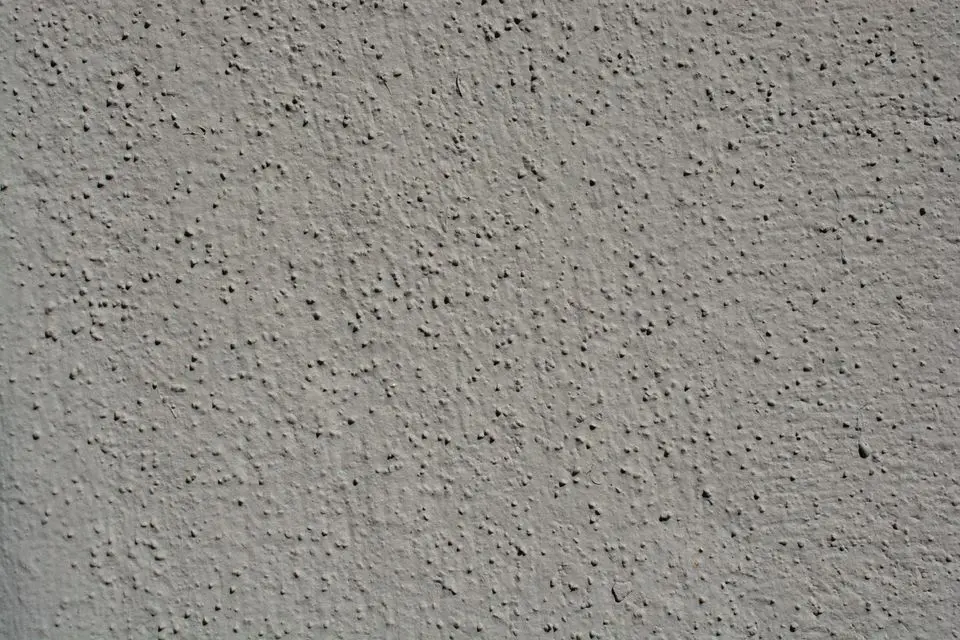
Stucco is porous cement plaster — cement, sand, lime, and water troweled onto the wall in layers. That porosity is why it holds onto dirt and growth, and why it doesn’t hold up to a pressure jet:
- It etches the texture. A narrow tip at close range carves lines into the finish, and those wand marks are permanent. The texture is the finish.
- It chips and cracks. Stucco is hard but brittle. A jet aimed at corners, edges, or an existing hairline crack can knock pieces loose.
- It drives water into the wall. Aim a jet into cracks, around window trim, or up under the metal edge at the bottom of the wall, and you push water where the wall was never meant to get it — and where it dries slowly.
- It peels paint and coatings. A lot of LA stucco has been painted or covered with an elastomeric coating, a thick, rubbery paint. High pressure finds any weak spot in adhesion and lifts it.
- It’s even rougher on synthetic stucco. If your “stucco” sounds hollow when you tap it, it may be EIFS — a synthetic finish over foam board. Low pressure only, with extra care around seams and openings.
How to clean stucco the right way
Whether it’s one wall or the whole house, the process is the same:
- Inspect first. Walk the walls and look for cracks, chips, and peeling paint. Hairline cracks are normal in stucco, but wider cracks or crumbling spots should be dealt with before washing. Water plus cracks is how small problems become big ones.
- Protect what’s around the wall. Pre-wet plants and lawn so they don’t soak up cleaner, cover outlets and light fixtures, and close the windows.
- Pre-wet the wall. Damp stucco absorbs less of the cleaning solution, and the solution stays wet longer.
- Apply cleaner from the bottom up. Working upward keeps solution from running down dry, dirty wall and leaving clean streaks that are hard to blend.
- Let it dwell — but don’t let it dry. Give it the contact time on the label. If it starts drying, mist it lightly.
- Work in the shade. Do sunny walls early or late. On a hot Valley afternoon, cleaner can dry on the wall before it does anything except leave streaks.
- Rinse from the top down, gently. Garden-hose pressure, top to bottom, so dirty water runs over wall you haven’t rinsed yet.
- Let it dry, then spot-treat. Damp stucco always looks darker. Judge it dry, and give stubborn spots a second application and a soft brush — never a closer nozzle.
Stain by stain: what the color is telling you
The right stucco cleaner depends on what’s on the wall, and the color is usually the giveaway.
Green: algae
Green stucco is almost always algae, and it grows where walls stay damp: shaded north-facing sides, walls behind dense shrubs, and anywhere a sprinkler hits every morning. Algae on stucco is alive, so it needs a cleaner made to kill it — a house-wash or mildew-and-algae cleaner — not just scrubbing. Fix the moisture source, like re-aiming that sprinkler, or it comes right back.
Black or gray: mildew, mold, and dirt streaks
Mildew on stucco usually shows up as gray-black speckling on shaded walls, and near the coast, where the marine layer keeps surfaces damp into the afternoon, it spreads fast. It needs the same kill-the-growth approach as algae.
Not every dark stain is alive, though. The dirty streaks running down from window sills and ledges — sometimes called stucco tears — are grime carried by rain, and a detergent wash usually lifts them. Streaks that start at the roofline often point to clogged gutters overflowing onto the wall.
A quick way to tell growth from dirt: dab a hidden spot with diluted household bleach. If it lightens within a minute or two, it’s mildew. If not, it’s dirt.
Brown or orange: rust, sprinkler water, and splash-back
Three usual suspects:
- Rust — orange streaks below metal: hose bibs, light fixtures, railings, gates.
- Irrigation water — stucco water stains often show up as a tan-to-orange band at sprinkler height, left by minerals in the water hitting the same spot every day.
- Splash-back — a brown band along the bottom of the wall where rain hits bare soil and splashes dirt up.
Splash-back and many water stains come off with a standard wash. True rust needs a rust remover labeled safe for masonry — test it first, because some products can lighten colored stucco. And redirect the sprinkler, or the stain will be back.
White: efflorescence and mineral crust
White, powdery deposits are usually efflorescence: salts carried out of the stucco as moisture moves through it and evaporates. Crusty white rings near the ground are often sprinkler minerals. Brush efflorescence off dry with a stiff nylon brush before reaching for water, since soaking it can dissolve the salts back into the wall to reappear later. If it keeps coming back, water is getting into the wall somewhere, and that’s worth tracking down before more cleaning.
Gray film after fire season: ash and soot
After a nearby wildfire, ash settles deep into stucco texture. Don’t blow it or dry-brush it into the air. Health agencies advise gloves and a mask for ash cleanup; rinse gently with a hose first, then wash. Oily soot may need a degreasing cleaner and more than one pass.
Cleaning a small patch of stucco yourself
For a few square feet — a mildew patch by the hose bib, splash-back behind a planter — DIY is reasonable:
- Pick a hidden test spot and try everything there first.
- Mix a mild detergent in a bucket of water for dirt, or use a cleaner labeled for exterior mildew and algae for growth.
- Wet the area with a garden hose.
- Apply the cleaner, let it sit a few minutes, and scrub lightly with a soft-bristle brush. Never use a wire brush — it scratches the texture and can leave metal bits that rust.
- Rinse thoroughly with the hose, top to bottom.
- Let it dry completely before you judge the result.
Skip muriatic acid and anything that promises to “etch,” never mix cleaners, and remember that whatever you spray on the wall ends up in your planters.
When to hire a stucco cleaning service
DIY stops making sense when:
- It’s the whole house, or anything above first-story height.
- Growth covers multiple walls — that’s a full soft wash, not a spot clean.
- The stucco is painted or elastomeric-coated and already peeling or chalky.
- There are cracks you’d be spraying around.
- Stains come back after you’ve cleaned them twice.
At that scale, a stucco cleaning service earns its fee in the parts you don’t see: the inspection, the cleaner mix, the dwell time, and keeping it all out of your landscaping. That’s how our house and stucco washing works — an inspection of paint, stucco, and trim first, biodegradable and plant-safe detergents, landscaping pre-wet and runoff controlled, proper dwell time, and a low-pressure rinse from top to bottom.
FAQ
What’s the best stucco cleaner? The one matched to the stain: a mild detergent for dirt, a mildew-and-algae cleaner for green or black growth, a masonry-safe rust remover for orange streaks, and dry brushing for efflorescence. Avoid acids and abrasives, especially on painted stucco, and test a hidden spot first.
How often should a stucco house be washed in Los Angeles? Most homes benefit from an annual wash. Coastal homes and high-traffic areas often need it twice a year, because salt, soot, and mildew build up faster.
Can washing stucco cause water damage? It can, if high pressure forces water into cracks or around windows. A low-pressure rinse, with cracks addressed before the wash, keeps the water on the outside of the wall.
Will a soft wash hurt my plants? It shouldn’t. We use biodegradable, plant-safe detergents, pre-wet the landscaping before anything is applied, and control runoff.
If your walls need more than a spot clean, see how house and stucco washing in Los Angeles is done, then grab a few photos — one wide shot of each stained wall, plus a close-up of the worst spot — and send them for a photo quote. Most quotes come back within about an hour during business hours, scheduling is same-week, and you deal with Logan directly, not a call center. Rather talk it through? Call (323) 892-7463 — that’s (323) 8WASH ME.