A proper gutter cleaning service clears every run by hand, flushes the downspouts until water runs free, and tells you what it found along the way. In Los Angeles, the time to book it is before the rainy season — not after the first storm finds the clog for you.
LA gutters live an odd life. They sit empty for months, baking in the sun and quietly collecting leaves, palm debris, and roof grit. Then they’re asked to move a winter’s worth of water in a handful of hard storms. Here’s what goes wrong, what a good service actually does about it, and where the DIY line sits.
Why LA gutters fail in the first storm
Our rainy season runs roughly November through March, and it almost always arrives after a long dry stretch with nothing flushing the system. All summer and fall, debris settles into the runs and dries into a loose mat. Then the Santa Ana winds blow through and add a fresh layer on top.
What ends up in LA gutters is its own special mix:
- Eucalyptus — long leaves and peeling strips of bark that bridge across the gutter and trap everything behind them.
- Palm debris — fibrous frond pieces and seed clusters that are perfectly sized to plug a downspout inlet.
- Pine needles — they knit together into a dense mat that slows water to a crawl.
- Jacaranda blossoms — lovely on the tree in late spring, purple sludge in a gutter.
- Roof grit — dust, granules, and whatever the wind deposited on the roof, all of which washes into the gutters the first time it rains.
The first real storm turns that dry mat into sludge. Water that should drain sits in the run, the downspout elbow plugs, and the overflow goes wherever gravity decides.
What clogged gutters actually cost you
A gutter has one job: move water off the roof and away from the house. When it can’t, the water picks its own route, and every one of those routes is more expensive than a cleaning.
- Overflow stains on the walls. Water sheeting over a full gutter carries dirt and leaf tannins down the stucco, leaving dark streaks and drip lines that a garden hose won’t touch. That’s a house and stucco washing job after the fact.
- Fascia rot. Gutters hang on the fascia boards along the roof edge. When water backs up, it soaks the wood behind the gutter, and repeated soaking is how fascia rots and gutters start pulling loose.
- Erosion at the foundation and in the landscaping. A blocked downspout means the whole roof’s runoff dumps in one spot — next to the footing, into a planting bed, or down a hillside. On sloped lots, that concentrated water moves soil.
- Dry fuel at the roof edge. CAL FIRE advises clearing dead leaves and needles from roofs and gutters, and for good reason: during a wildfire, wind-carried embers can land in exactly that kind of dry debris. In LA, where Santa Ana season and fire season overlap, a clean gutter matters in October as much as in January.

What a gutter cleaning service should do
Whether you hire the first result for “gutter cleaning near me” or a company your neighbor swears by, the job should look like this:
- Set up without damaging the gutter. A ladder leaned straight against the gutter can dent or bend it. A pro uses a standoff or positions the ladder clear of the run.
- Clear the runs by hand. Gloves and a scoop, working the full length of each run. Debris shouldn’t be blasted down the downspout, where it becomes a worse clog.
- Bag or haul the debris. It shouldn’t end up dumped in your flower beds or blown across the lawn.
- Clear the inlets and elbows. The downspout opening and the bends below it are where clogs actually lodge.
- Flush the runs and downspouts. Water goes in at the far end of each run and should come out the bottom of the downspout at full flow. That’s the proof the system works.
- Watch how the water moves. Water still standing in a cleared run means the slope is off. Drips at seams or end caps mean leaks.
- Tell you what they saw. Sagging sections, loose hangers, leaking seams, a downspout disconnected at the bottom — you should hear about all of it, ideally with photos, even if the fix isn’t part of the job.
If a company’s plan is “scoop the top layer and leave,” keep shopping.
What Logan’s gutter cleaning covers
Our gutter cleaning in Los Angeles clears leaves, dirt, and debris from the gutter runs, including the tough-to-reach buildup inside runs and inlets. Downspouts get flushed until water flows freely, the gutter-edge exterior gets cleaned so the roofline looks finished, and you get photos of the cleared runs before the crew leaves.
If the roof itself is streaked or mossy, gutter work pairs naturally with soft-wash roof cleaning: one visit, one clean roofline, and water moving the way it should before winter rain finds the weak spot.
How often should you clean gutters in Los Angeles?
At minimum, once a year, before the rainy season. That’s the cleaning that matters most, because it clears a full dry season of debris right before the system has to carry real water.
From there, the trees decide:
- No trees near the roof: once a year in the fall is usually enough. Roof grit and windblown debris still build up, just slowly.
- Trees near the roofline: plan on twice — once before the rains, and again in spring after the storms, when the next round of leaves and blossoms starts dropping.
- Pines or eucalyptus overhanging the roof: these shed all year. Check after every major wind event and expect more than two cleanings.
- After a Santa Ana event: look up. One windy day can refill gutters that were cleaned a month ago.
Gutter guards change the frequency, not the need. Needles and blossoms mat on top of screens and fine grit settles underneath, so guarded gutters still need checking.
The easiest test costs nothing: during the next rain, step outside and watch the downspouts. A strong, steady flow means the system is working. A trickle while water spills over the gutter lip means it’s time.
The DIY reality: ladders, wet roofs, and wind
Single-story gutters with light, dry debris are a reasonable DIY job for someone comfortable on a ladder. Falls from ladders are a well-known cause of serious home-maintenance injuries, so the basics are not optional:
- Firm, level footing. Set the base about one foot out for every four feet of height.
- Three points of contact at all times. If you have to lean to reach, climb down and move the ladder. Keep your belt buckle between the rails.
- Never on a wet roof, and never on a wet ladder. Morning dew and the day after a storm are when slips happen.
- Skip Santa Ana days. Gusty wind plus an extension ladder is a bad combination, and the debris you dislodge ends up in your eyes.
- Look up for power lines. The electrical service line often runs to the house near the roofline. Keep the ladder, especially an aluminum one, well clear.
- Don’t run a pressure washer from a ladder. The wand’s kickback is a classic way to lose your balance.
- Stay off tile roofs. Clay and concrete tile can crack underfoot, and a cracked tile is a leak waiting for rain.
What about cleaning gutters from the ground?
If you’ve searched how to clean gutters from the ground, you’ve seen the tools: telescoping wands that attach to a garden hose, leaf-blower gutter kits, and pole-mounted scoops. They work best on single-story runs with dry, loose debris. Their limits are real, though. You can’t see into the gutter, wet sludge doesn’t blow, and flushing from below can push a packed run straight into the downspout — turning a gutter clog into a downspout clog.
When it stops being a DIY job
- Two-story rooflines, or hillside lots where the ladder can’t sit level.
- Tile roofs you’d have to walk on to reach the gutter.
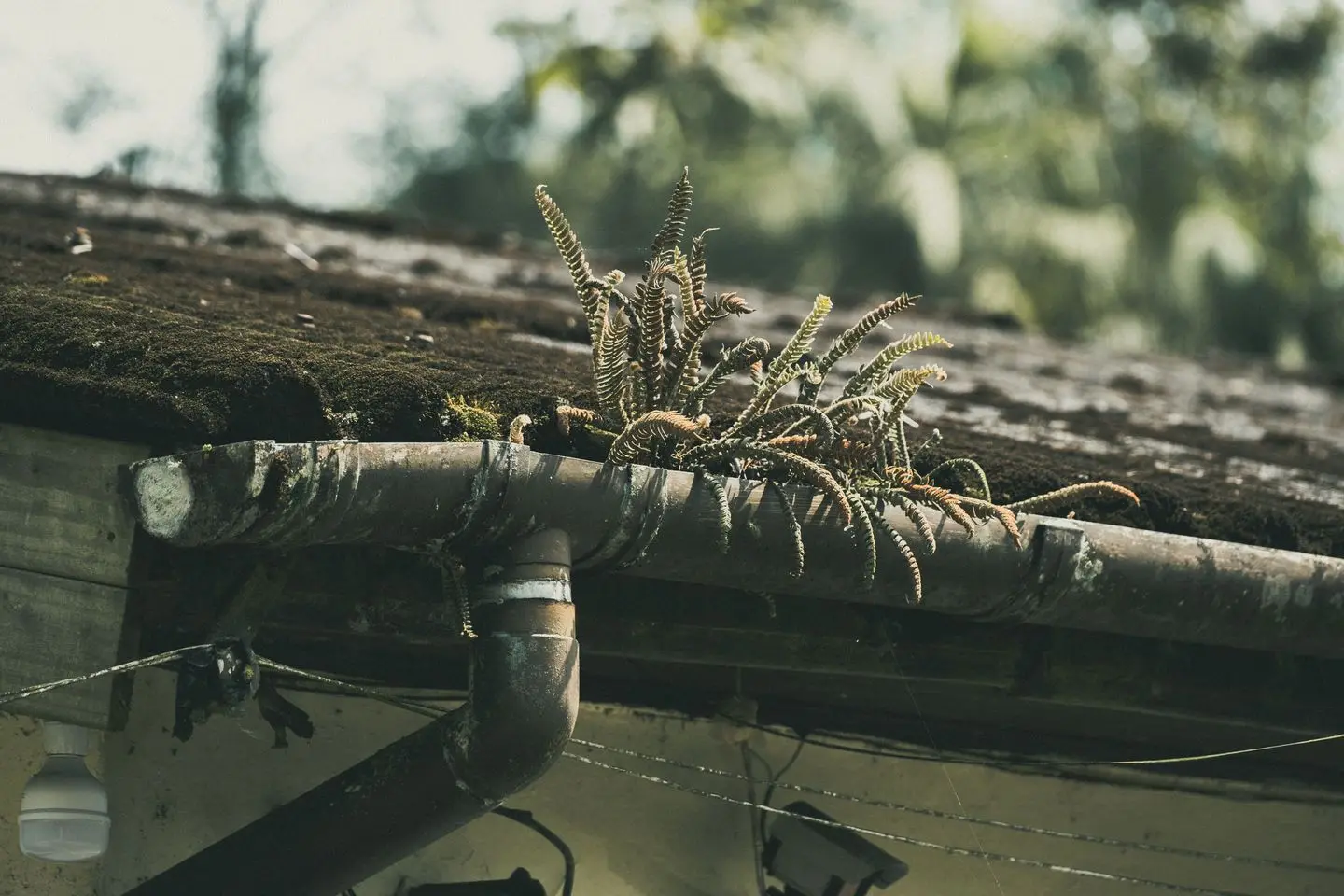
- Packed, wet sludge, or plants growing out of the run.
- Sagging sections or gutters pulling away from the fascia.
- Downspouts that stay clogged after flushing. If the downspout feeds an underground drain line, the clog may be below ground — usually a job for a plumber or drain-cleaning company.
FAQ
How much does a gutter cleaning service cost? It depends on roofline length, height, and how packed the runs are — a single-story home with light debris and a two-story hillside home under eucalyptus are very different jobs. The guide to pressure washing costs in Los Angeles explains what drives a quote. The fastest way to a real number is a couple of photos of your gutter line plus the address.
Can you clean the gutters and the roof in one visit? Yes. Gutter-edge and downspout inlet cleaning combines naturally with roof washing, so the whole roofline gets handled in one visit and the water has somewhere to go.
Do gutter guards mean I never have to clean my gutters? No. Guards keep out big leaves, but pine needles, jacaranda blossoms, and seed pods mat on top of them, and fine roof grit gets underneath. Check guarded gutters at least once before the rainy season.
Is it too late once the rain has started? Not at all. LA’s rainy season comes in bursts with dry days between storms, and a cleaning in one of those windows still protects you for the rest of the season. Just don’t do it yourself on a wet roof.
Get the gutters handled once, properly, before the next big storm. See what’s included in our Los Angeles gutter cleaning service, then snap a couple of photos of your gutter line, add the address, and send them for a photo quote — most quotes come back within about an hour during business hours, scheduling is same-week, and you deal with Logan directly, not a call center. Rather talk it through? Call (323) 892-7463 — that’s (323) 8WASH ME.