
Here’s how to remove oil stains from a driveway: soak up whatever is still liquid, break down what has soaked in with a degreaser and a stiff brush, and pull old, set-in oil back out with a poultice or an enzyme cleaner. Fresh spills often come out completely; stains that have sat through a few summers usually lighten a lot but can leave a faint shadow.
That gap between fresh and old is the whole story. Concrete is porous — closer to a hard sponge than a countertop — and motor oil wicks into it. The sooner you act, the less of it you’re chasing.
Fresh spill or old stain? Start here
Look at the spot before you buy anything.
- Fresh (hours to a few days): still glossy or tacky. Most of the oil is near the surface. Absorb first, then degrease.
- Old (months to years): a flat, dull, gray-to-black shadow with soft edges. The oil has wicked deep and aged in place. Absorbents alone won’t touch it; you’ll need a poultice, an enzyme cleaner, or several rounds of degreaser.
In the San Fernando Valley that clock runs fast. Warm oil is thinner and soaks in faster, so a drip on a sun-baked afternoon driveway can be well into the pores by evening — Valley heat effectively bakes oil into concrete.
How to remove oil stains from a driveway, step by step
Step 1: Absorb fresh oil (don’t hose it)
- Blot, don’t rub. Rags or paper towels pick up puddled oil; wiping spreads it.
- Cover it with an absorbent. Non-clumping clay cat litter, sawdust, cornstarch, or baking soda all work. Be generous.
- Grind it in with your shoe so the granules reach the oil in the surface texture.
- Wait a few hours at minimum; overnight is better.
- Sweep up and bag it. Don’t sweep oily absorbent into the street — check your city’s household hazardous waste guidance.
Step 2: Scrub with dish soap or a concrete degreaser
What’s left is oil already in the pores. For light stains, grease-cutting dish soap in warm water can be enough. For anything darker, use a degreaser labeled for concrete.
- Dampen the concrete lightly, unless the label says to apply it dry.
- Apply the degreaser and let it dwell for the time on the label. Don’t let it dry out.
- Scrub hard with a stiff nylon brush, from the edges of the stain inward.
- Soak up the dirty solution with absorbent or a wet/dry vac instead of rinsing it away.
- Repeat. Two or three rounds is normal for a stain that’s a few weeks old.
Step 3: Use a poultice for old, set-in stains
A poultice pulls oil out of the concrete instead of scrubbing at the top. The solvent dissolves the oil; as it evaporates, the powder draws the oil up with it.
- Mix a fine absorbent (diatomaceous earth, crushed cat litter, or baking soda) with a solvent such as acetone or mineral spirits to the consistency of peanut butter.
- Spread it a quarter- to half-inch thick, a little past the stain’s edges.
- Cover with plastic sheeting and tape the edges so the solvent works slowly.
- After a day or so, remove the plastic and let the paste dry completely.
- Scrape and sweep it off. Lighter but not gone? Do it again.
Solvents are flammable and the fumes are no joke: work outdoors, keep sparks away, wear chemical-resistant gloves and eye protection, and keep kids and pets clear.
Step 4: Try an enzyme or bacterial cleaner on stubborn shadows
Bio-based oil cleaners use microbes or enzymes that break down hydrocarbons. They’re slow — days, not minutes — and need to stay damp, but they’re gentle on the surface and good at the faint shadows degreasers leave behind. Expect repeat applications.
Step 5: Pressure wash the whole slab — after the chemistry
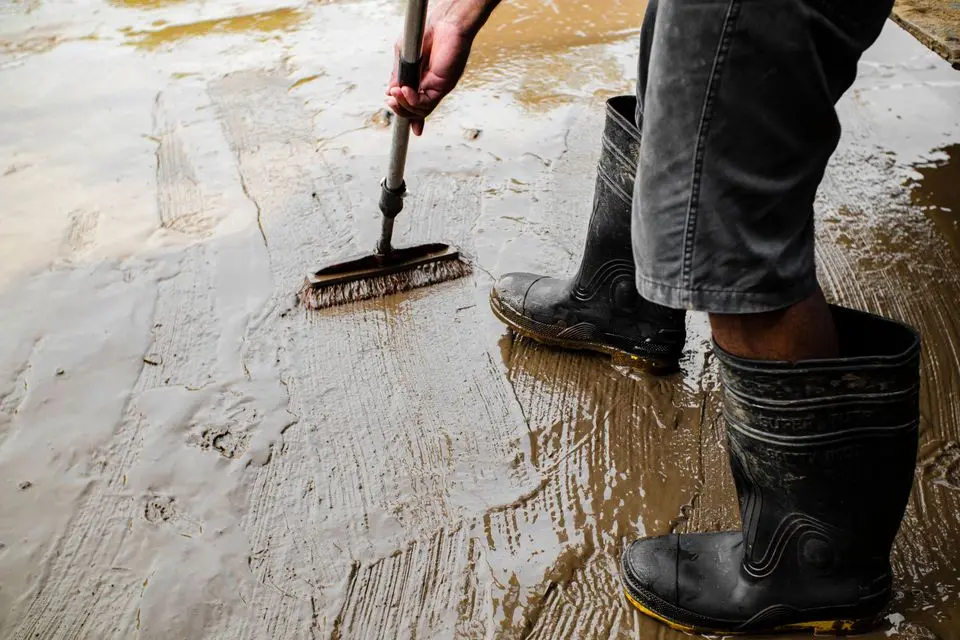
A pressure washer doesn’t dissolve oil. Blasting a stain without degreaser mostly cleans the concrete around it, which can make the spot look worse by contrast. Used last, it flushes out loosened residue and evens out the color.
Renting? Use a 25- or 40-degree tip, keep the wand moving, and never use the red 0-degree tip on concrete — it can carve lines into the surface.
What not to do
- Gasoline or other fuels. Flammable, nasty to breathe, and they just thin the oil and spread it.
- Bleach. It doesn’t break down oil, and it can blotch colored concrete.
- Mixing products. Bleach plus ammonia or acid releases toxic gas. One product at a time.
- Muriatic acid, unless you really know what you’re doing. Acid doesn’t dissolve oil; it etches the cement paste and can leave a lighter, rougher patch that’s more noticeable than the stain.
- Wire brushes on stamped, colored, or sealed concrete. They scratch the color and sealer, and stray steel bristles can leave rust specks of their own.
- Rinsing degreaser into the street. Los Angeles stormwater rules prohibit washing pollutants into storm drains, and the gutter in front of your house feeds them — and storm drains carry water to creeks and the ocean without treatment. Absorb it, wet-vac it, or contain it.
Concrete, pavers, asphalt, and stamped concrete aren’t the same job
Broom-finish concrete is the most forgiving: absorbents, degreasers, poultices, enzyme cleaners, and a pressure-washer rinse are all fair game.
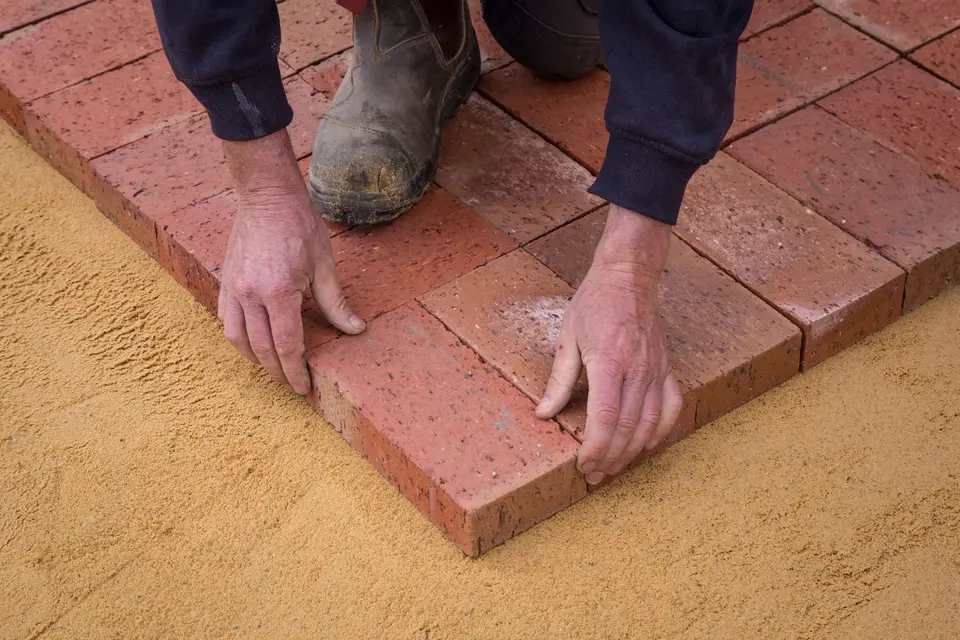
Pavers are usually concrete too, so the same chemistry works on the stones. The catch is the sand between them: a pressure washer aimed at the joints blows it out. Use a brush and a poultice rather than a blast — and a badly stained paver can often be lifted and swapped for a spare. Our guide to paver driveway cleaning and polymeric sand covers the joints in detail.
Asphalt has a petroleum-based binder, so solvents like acetone or mineral spirits — and some degreasers — can soften it. Skip the solvent poultice; stick to absorbents, dish soap, cleaners labeled safe for asphalt, and low pressure. Oil itself slowly softens asphalt, one more reason to clean drips quickly.
Stamped, colored, or sealed concrete has a coating on top. On a healthy sealer, oil often sits on the surface and lifts with dish soap. But solvents like acetone and xylene can soften or haze many sealers, and high pressure can scuff the color. Test on a hidden spot, use a nylon brush, and keep the pressure moderate. Our soft wash vs. pressure washing breakdown explains why coated surfaces get gentler treatment.
Why old stains need professional pretreatment
Years of drips under the same parking spot, baked in summer after summer, sit deep enough that a weekend of scrubbing buys a lighter shadow and sore forearms.
Professionals work in the same order you would — chemistry first, pressure second — with more time and better tools. Pretreatment goes on the stains and gets real dwell time to break the oil down. Then a commercial surface cleaner — spinning jets under a shroud at a fixed height — washes the whole slab in even, overlapping passes, so the driveway comes out one color instead of striped. Oil, rust, and tire marks are exactly what driveway cleaning and oil stain removal is built around.
Honest expectations, though: some deep, old stains lighten dramatically and still leave a faint ghost. A decade of soaked-in oil may need repeat treatments, and a reputable company will say so up front instead of promising “like new.”
“My driveway was covered in years of oil stains and grime. I honestly didn’t think it would ever look clean again. Logan made it look spotless in under 2 hours. Super friendly and pricing was totally fair for the job done.”
— Amanda G., Van Nuys
When to call a driveway cleaning service
DIY makes sense for one or two fresh drips. A driveway cleaning service makes more sense when:
- The stains are old, large, or spread across several parking spots.
- The whole driveway has gone gray, so cleaning one stain would leave a bright patch.
- The concrete is stamped, colored, or sealed and you don’t want to experiment.
- You’re getting ready to sell, or a move-out walk-through is coming.
Ask any company how they handle runoff. On our jobs, detergents are biodegradable and plant-safe, landscaping is pre-wet, and runoff is controlled. As for cost, an oil stain removal service comes down to square footage, how many stains and how old, the surface, and access — the factors are laid out in what pressure washing costs in Los Angeles.
Keeping oil off the driveway
- Fix the leak. A drip pan buys time; a repair ends the problem.
- Use a drip pan or garage mat under any car that’s marking its spot.
- Clean drips the same day. Absorbent on a fresh drip beats a poultice on an old stain every time.
- Look into sealing. A sealer makes concrete less absorbent, so drips stay on the surface where they wipe up. Worth researching once the driveway is clean — sealing over a stain just locks it in.
FAQ
Does cat litter really work on oil stains? On fresh spills, yes — non-clumping clay litter soaks up liquid oil before it sinks in. On old stains it does very little, because the oil is already deep in the concrete. Treat it as first aid, then follow with a degreaser.
Will pressure washing alone remove oil from concrete? Rarely. Water doesn’t dissolve oil, so pressure without a degreaser mostly cleans around the stain. Degrease first, then pressure wash the whole area for an even finish.
How do you get oil off concrete that’s been there for years? Use a solvent poultice to draw the oil out, or an enzyme cleaner over several days, and expect repeat rounds. Very old stains often lighten rather than vanish; professional pretreatment and a surface cleaner get the most out of them.
Can I wash degreaser into the street gutter? No — street gutters feed the storm drains, and LA stormwater rules prohibit washing pollutants into them. Soak up the solution with absorbent or a wet/dry vac instead.
If the stain has outlasted your brush, hand it off. Our driveway cleaning in Los Angeles covers oil, rust, and tire marks on concrete, pavers, and asphalt. Snap a couple of photos, add the address, and get a photo quote — most quotes come back within about an hour during business hours, scheduling is same-week, and you deal with Logan directly, not a call center. Rather talk it through? Call (323) 892-7463 — that’s (323) 8WASH ME.